
 Share
Share Post
PostPublished
Names of the individuals in this article have been changed for privacy.
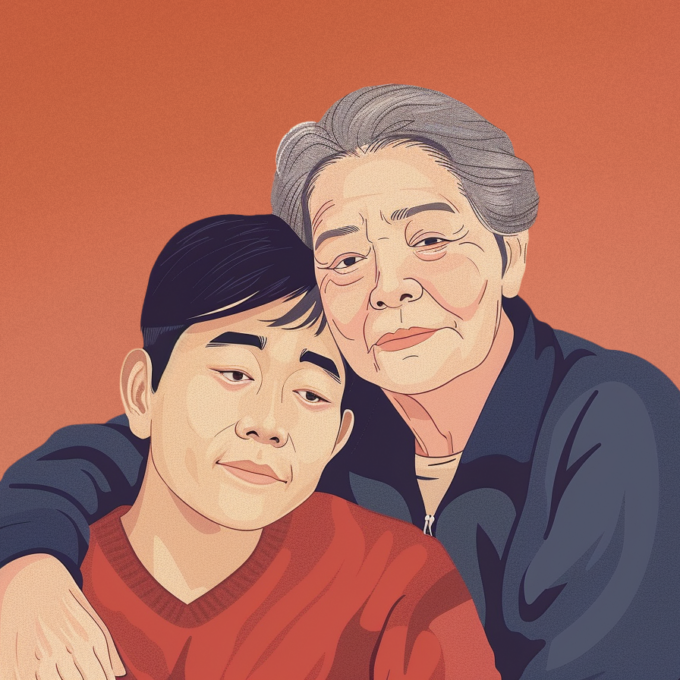
Yoko was born in Japan and moved to the U.S. after marrying an American. She experienced significant emotional and financial abuse by her husband, and she lacked a strong support system in different aspects of her life. Because of this and the ongoing abuse from her husband, her son Minato’s developmental disabilities were not recognized until he was in elementary school. Due to the extra support that her son needed throughout his life, Yoko faced many difficult challenges as the primary caregiver for her son.
However, Yoko is not the only one in these shoes. Caregiving for adult children is often challenging, particularly for older parents who may be starting to experience a decline in their own health and wellbeing. Nearly one million households in the U.S. are of aging parents caring for both their adult
children with disabilities and themselves (Center for Medicare and Medicaid Services, 2021-2022).
Keiro’s partnership with Little Tokyo Service Center (LTSC) has made mental health services more accessible for older adults in the Japanese American and Japanese community. Countless individuals, like Yoko, have benefited from this culturally sensitive support.
Facing Challenges and Concerns
When Minato was in middle school and high school, he was placed in special education classes, where he experienced bullying but did not receive the appropriate support. At the time, “[my son] told the school [about the bullying], but they said he was making it up… I didn’t know what to do and thought it was him being a teenager,” Yoko explained. Minato’s challenges with bullying and lack of support continued after high school as he tried job training at the local Regional Center for the Developmentally Disabled. Despite multiple employment attempts over the years, he struggled to find a job and adapt socially, ultimately placing a lot of blame on Yoko.
At Minato’s request, Yoko considered moving to another state on multiple occasions. However, she was conflicted and concerned about losing the benefits and service support they had in California. Her friends expressed concerns about Minato’s behaviors and suggested putting him in a group home, as they were afraid of what might happen to Yoko due to the stress of caring for Minato.
Seeking Support
Feeling overwhelmed, in 2021, Yoko saw an advertisement for LTSC’s mental health services, which are provided through a partnership with Keiro. At the time, her son was unemployed and socially isolated, and she was struggling as well. “I just thought it would be good to talk to someone about this situation [in Japanese], just to have someone listen… It’s something you can’t talk to your friends about,” Yoko explained.

For the next four years, Yoko had regular counseling sessions with LTSC staff and shared, “Little by little, I felt like I could keep on living after talking to [LTSC].” She was able to gradually build up confidence in herself, recognizing the challenges she faced and not being ashamed to name them. She also learned about available resources and proactively sought support.
Yoko would like Minato to be more independent, but acknowledges that this will be a difficult task. She explained that during her counseling sessions, she was able to express her concerns about her son and how their situation had been affecting her. Yoko was given helpful skills to cope with these challenges, and she worked on improving her relationship with her son. Since then, Minato has been going to the gym, has sought help from the Regional Center for the Developmentally Disabled, and expressed gratitude to Yoko for their meals.
“One Step at a Time…”
Although planning for one’s own future care needs as one ages is difficult enough, advance care planning for one’s adult children with disabilities, especially if they cannot care for themselves, is an added challenge. People with developmental and/or intellectual disabilities, whether they are born with or acquire them, are living longer than ever before due to medical advances and improved community support systems. For example, the average life expectancy of a baby born with Down syndrome has more than doubled from 26 years in 1950 to 53 years in 2010 (Down Syndrome Population, 2024). Life expectancy for those with cerebral palsy, spina bifida, autism spectrum disorder, and other types of developmental and intellectual disabilities has also increased significantly over the decades.
Being a life-long caregiver can take a physical, emotional, social, and financial toll on one’s quality of life, and caring for yourself and your adult child can seem insurmountable at times. But when situations get tough, Yoko has been able to apply the lessons and skills she learned in therapy to various aspects of her life.
Now in her late 60s, Yoko works part-time at a market and is an In-Home Supportive Services (IHSS) caregiver for her son. She also has several chronic health conditions, including diabetes, high blood pressure, inflammation, and poor vision. Although she is uncertain about her future, she knows it is essential to take care of herself as well. Yoko is very grateful to the LTSC staff, especially her counselor, for all of the support that she received. She advised others, “Instead of worrying about [the problem] on your own, it is better to call and talk to a professional for their advice. Even if the problem isn’t solved, you may feel better.”
Sources
- Center for Medicare and Medicaid Services. (2021-2022). State Spotlights: Supporting Adults with Intellectual and Developmental Disabilities and Their Aging Caregivers. Retrieved from https://www.medicaid.gov/medicaid/downloads/Adults_with_IDD_State_Spotlights.pdf.
- Down Syndrome Population. (May 3, 2024). People living with Down syndrome in the USA: BIRTHS AND POPULATION. Retrieved from https://docs.downsyndromepopulation.org/factsheets/down-syndrome-population-usa-factsheet.pdf.