
 Share
Share Post
PostPublished
“It is not the passage of time that makes getting older so much harder than it has to be — it is ageism.” – Ashton Applewhite [1]
Changes in our bodies are not the only reasons why aging is viewed negatively; it is a social construct. Consider these two simple statements: “You look so young” and “You look so old.” What thoughts come to mind? In many cultures and trends, people may say that youth is good and aging is bad. But why are we led to perceive aging so unfavorably?
In December 2025, Keiro conducted an anonymous survey of 105 participants aged 23 to 99 to learn about Our Community’s perspectives on aging. When asked what influenced their perception of aging, the most common responses, in order, were personal experiences, family/friends, and health care professionals.
Today’s society has stigmatized what it means to be “old” — gray or white hair, joint pain, slower movement, wrinkles, and memory loss. Whether it be an advertisement for anti-aging supplements, a caricature of a stubborn grandparent in a movie, or jokes about growing old, ageist remarks are so normalized that the discrimination is often overlooked. These ageist perceptions can impact other aspects of daily lives including employment, accessibility in neighborhoods, legal systems, and health/social care. [2]
For 65 years, Keiro has maintained the belief that aging is a process to be embraced, challenging predetermined notions. To better understand the impact of these social attitudes, we turn to research and evidence.
The Research Shows…
Stereotype Embodiment Theory (SET) states that stereotypes are embodied when their assimilation from the surrounding culture leads to self-definitions that, in turn, influence functioning and health. [3] Ultimately, age discrimination can have a negative effect on one’s overall quality of life. The American Psychological Association explained, “Individuals who experience everyday ageism report a higher prevalence of chronic health conditions, poorer mental health, and increased symptoms of depression, with internalized negative ageism being linked to declines in cognitive and physical health…” [4]
Despite the drastic repercussions of age discrimination, its negative effects are often overlooked or not taken seriously. In tandem with these findings, multiple experiments showed that group interventions centered on discussing the positive aspects of aging successfully enhanced participants’ perceptions of their own aging experience and improved physical function. [5] [6] This study supports the notion that fostering an age-positive atmosphere and reframing the collective perception of aging can lead to remarkable improvements in an individual’s overall health.
Challenging the Stereotypes
One of the first steps in combating ageism is to identify how, where, and in what ways it manifests. Ageism can take form both consciously (explicitly) and unconsciously (implicitly), and it can be difficult to detect and overcome because of its implicit nature and how it is heavily ingrained in our everyday lives. [7]
There are small and large ways that we can begin to identify ageism and head towards a path of acceptance and empowerment. In Ageism Unmasked, Tracey Gendron, PhD, wrote, “Once you begin to recognize ageism in all its forms, you will be able to make conscious choices on how you want to experience aging.” [8]
Here are a few tips to help combat age-related stereotypes and biases:
- Challenge Stereotypes in Everyday Conversations
- Identify and name the age-related bias when it appears. Replace deficit-based language (e.g. “Your memory has gotten so bad, it is probably because you’re getting older.”) with strength-based language (e.g. “You must have so many memories growing up, can you share your favorite one with me?”)
- Stay Visible in and Engaged with Community Life
- Participation in community groups, churches/temples, and volunteer roles increases your visibility as an active member of the community. Stereotypes may weaken when older adults are seen leading, organizing, participating, and innovating, especially in a multi-generational organization.
- Promote Lifelong Learning and Skill Building
- Engage in learning new technologies, languages, arts, professional skills, and hobbies. Exemplify curiosity and adaptability in your interests.
- Reframe Aging as a Life Stage, not a Decline
- Emphasize that aging includes continuity, adaptation, and contribution, not just loss. Talk about aging the same way you talk about childhood or adulthood. Aging is complex and varied, yet it is still as meaningful as any life stage.
- Support Research That Counters Aging Myths
- Participate in surveys, studies, and community assessments that help depict the realities of aging. Many misconceptions about aging stem from a lack of knowledge about the true aging experience.
Embrace Your Aging Journey
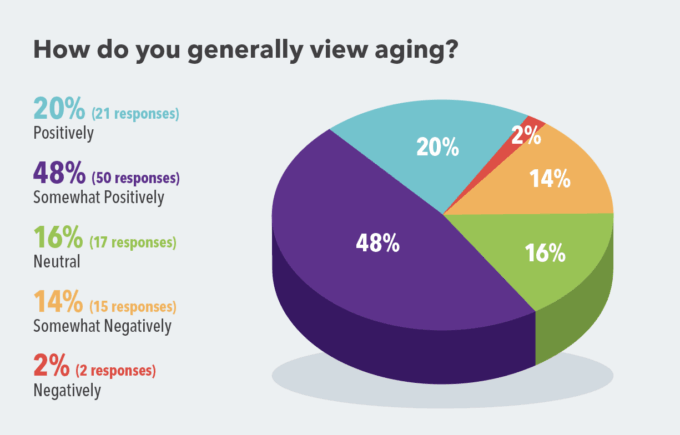
Our Community has already taken that step towards a shift in aging perspective, with 68% of survey respondents saying that they generally view aging as “Positive” or “Somewhat Positive.” Presenting information in a positive light can help counteract existing stereotypes and prejudices about older age. [2] Letting go of society’s fear-based mentality about aging can help you appreciate the value of your own journey.
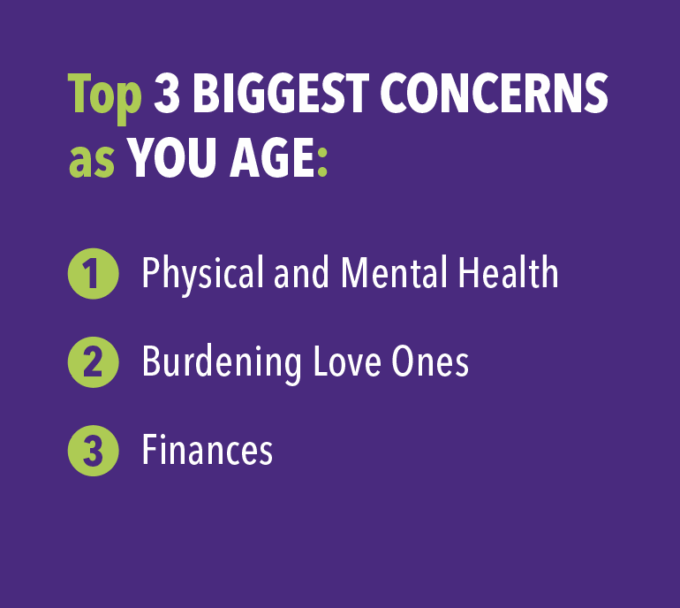
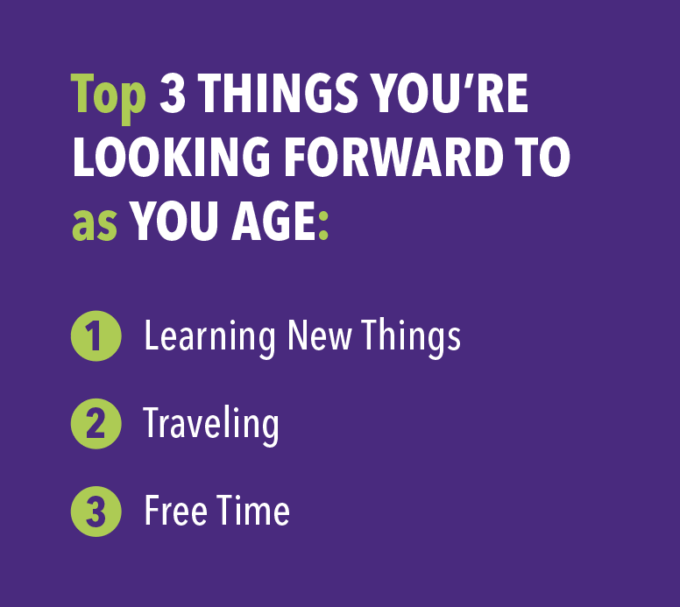
Respondents shared that when it comes to aging, they are most looking forward to learning new things, traveling, and having free time. Reflecting on their aging experience, one respondent, age 75, added, “We may not understand everything, but it’s fun to try.”
Take a moment to ask yourself, “What aspects of aging do I appreciate?” Commit to embracing your answer with pride, and encourage others to do the same. Together, let’s celebrate the experiences and opportunities that aging brings.
Sources
[1] Applewhite, A. (2017 April). Let’s end ageism. TED. https://www.ted.com/talks/ashton_applewhite_let_s_end_ageism
[2] World Health Organization. (2021 March 18). Global Report on Ageism. In World Health Organization, United Nations Department of Economic and Social Affairs, United Nations Population Fund, United Nations Office of the High Commissioner for Human Rights (Eds.). World Health Organization. https://www.who.int/publications/i/item/9789240016866
[3] Levy B. (2009). Stereotype Embodiment: A Psychosocial Approach to Aging. Current directions in psychological science, 18(6), 332–336. https://doi.org/10.1111/j.1467-8721.2009.01662.x
[4] American Psychological Association. (2025 August). APA Resolution on Ageism. American Psychological Association. https://www.apa.org/about/policy/resolution-ageism
[5] Levy, B. R., Pilver, C., Chung, P. H., & Slade, M. D. (2014). Subliminal Strengthening: Improving Older Individuals’ Physical Function Over Time With an Implicit-Age-Stereotype Intervention. Psychological Science, 25(12), 2127-2135. https://doi.org/10.1177/0956797614551970
[6] Weir, K. (2023 March 1). Ageism is one of the last socially acceptable prejudices. Psychologists are working to change that. American Psychological Association. https://www.apa.org/monitor/2023/03/cover-new-concept-of-aging
[7] Comincioli, E., Hakoköngäs, E., & Masoodian, M. (2022). Identifying and Addressing Implicit Ageism in the Co-Design of Services for Aging People. International journal of environmental research and public health, 19(13), 7667. https://doi.org/10.3390/ijerph19137667
[8] Gendron, T. (2022). Ageism Unmasked. Steerforth Press.