 Share
Share Post
PostPublished
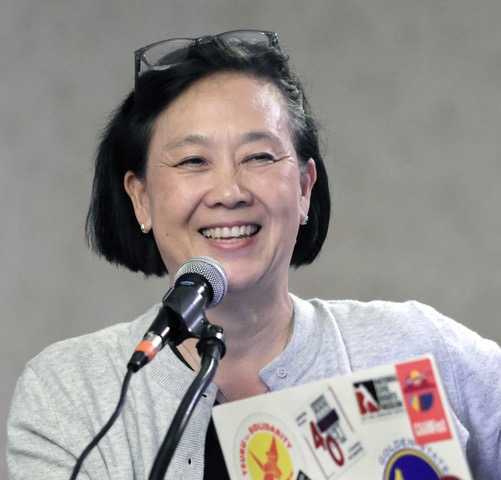
Much of Japanese American farming history does not appear in textbooks but is instead shared through family stories passed down from one generation to the next. Through documenting both Asian American and Japanese American farming and her own family’s history, Amanda Kim realized how much of that story was undocumented.
When she discovered that the War Relocation Authority had documented pre-World War II Nikkei farms, she knew that it was important, not just to her, but to many others. “For many people, their pre-incarceration farm is a missing page in their family history. And that is how the Kansha Project started.” Since its founding in 2023, the Kansha History Project has created the first database of just over 6,500 pre-World War II Nikkei farms, with the goal of transcribing 20,000 pre-World War II Nikkei farm records by 2030.
Utilizing the Keiro Grants Program
Since 2025, the organization has been a two-time recipient of the Keiro Grants Program, helping more families reconnect with their history, improving its digital archive, and expanding volunteer efforts.
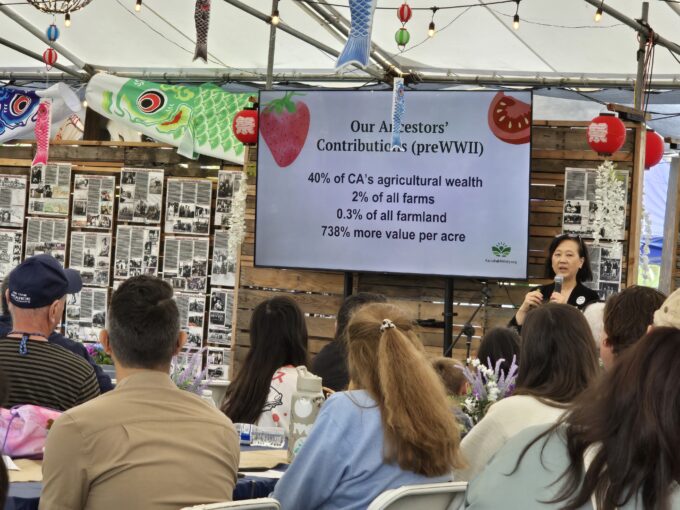
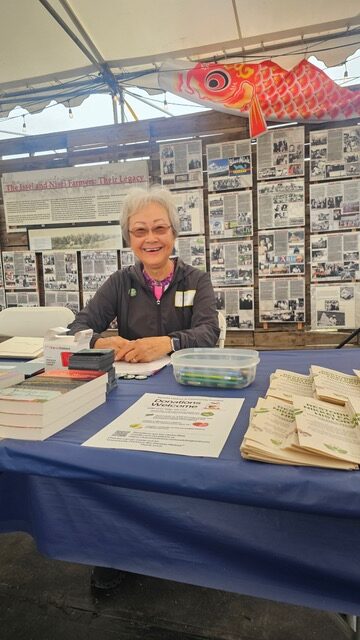
In May 2026, Kansha History hosted an event at Tanaka Farms to celebrate the history of Nikkei farming. Attendees enjoyed the new Nikkei farm history exhibits, stories from farming families, a taiko performance, and a “camp” lunch inspired by meals Japanese American incarcerees may have had at the camps. Volunteers were also available to help research family records.
Tanaka Farms – May 2026
Amanda credits Keiro with helping the organization strengthen connections across the community. “I am very grateful to Keiro for connecting us to so many wonderful service providers and for encouraging us to grow cultural connections digitally, in-person, and through acts of service.”
Connecting Generations
The hard work of Kansha History would not be possible without its dedicated volunteers, who transcribe data and connect people with their family records. Over 200 volunteers offered their time and skills, with the majority of them being retired Sansei or students. “Volunteering is a great way for both retirees and students to use their knowledge and skills for cultural and community work,” Amanda shared.
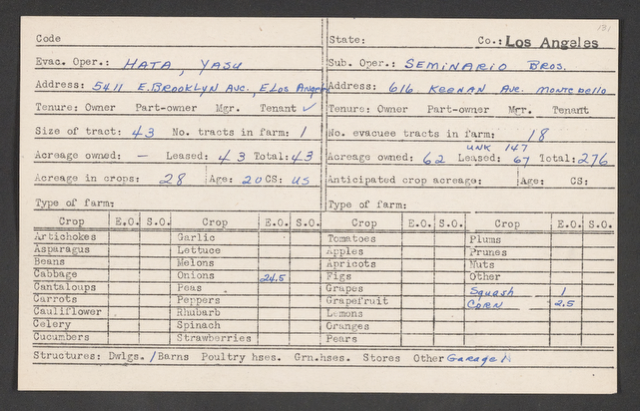
Kansha History Project volunteers transcribe family records from farm cards such as this one.
For volunteer Linda Nawa, what began as a search for her own family’s farming history became an opportunity to preserve history for others. Linda shared that, since many of these families rely on oral history, the organization’s efforts help clarify what their families went through.
Through volunteering, many of the Sansei have learned new technology skills, but most importantly, they have made newfound connections with younger volunteers who are also searching for information about their families. Recently, Linda connected with a volunteer who is a college student in the Midwest. They discovered that their ancestors had been neighbors, classmates, and close friends in the farming community in Norwalk, CA. Amanda is glad that this project offers volunteers the opportunity to bridge generations through shared interests and family stories.
Awareness is the Key
Amanda and Linda agree that the organization’s primary goal is to connect families and appreciate the full contributions of Japanese American farmers, one document at a time. Although Kansha History focuses on one aspect of Japanese American history, it is a vital story that needs to be told across generations. Amanda noted that “our motto is every record is a human story.” When providing descendants with the farming records, Kansha History encourages each person to discover their own history and decide what to carry forward.
Linda concluded, “Thank you to the Keiro Grants Program for being a part of the Kansha History Project’s journey as we document and celebrate each family farm story. And to our Issei and Nisei family members, we say, ‘Okage sama de’ (Because of you, I am).”
To learn more about the Kansha History Project and request your family farming records, visit kanshahistory.org.