
 Share
Share Post
PostPublished
Updated November 4, 2025
Older adults have a higher risk of falling as they age. Studies show that every year, 30% of people over the age of 65 report a fall, and that number increases to 40% for those over the age of 85 [1]. Certain health conditions like diabetes, heart disease, thyroid problems, and even poor eyesight and hearing create an even greater risk [2]. If an individual is not able to get up from a fall or no one is around to help, the amount of time that they are immobile will greatly affect their health and may prolong their recovery time.
This fact sheet covers traditional Personal Emergency Response Systems (PERS) designed to be worn by users and allow them to contact an emergency contact or emergency services through a call center. The second half of this fact sheet discusses newer wearable devices with fall-detection features. While these devices are similar, they should not be considered synonymous.
Personal Emergency Response System (PERS)
Fitting a house with “fall bars” or having an in-home caregiver can help prevent or manage falls within your home. However, a Personal Emergency Response System (PERS) is a wearable device that can be used at all times and alerts emergency personnel when you have fallen or are experiencing the onset of a medical condition. An additional benefit of some PERS devices is their ability to alert authorities in the event of other situations, such as burglaries, fires, or other emergencies requiring emergency assistance.
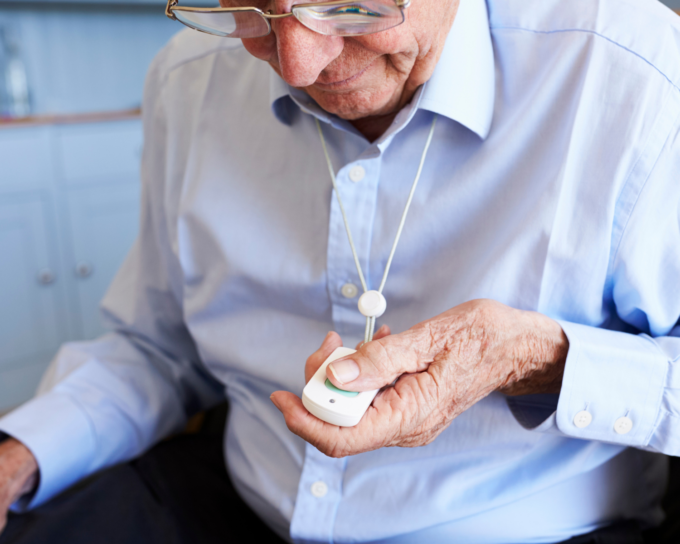
What is a Personal Emergency Response System (PERS)?
PERS devices allow you to call for help in an emergency by simply pushing a button while you are at home. The portable device (a small radio transmitter) communicates with a console that is attached to your telephone and an emergency response center.
How do I know if I need a PERS device?
These devices could benefit those with the following health conditions and/or under certain circumstances, as they will have access to 24/7 emergency help and rapid response by emergency services or a call operator:
- Inner ear or sensory issues
- Neurological disorders like Parkinson’s disease
- Cardiovascular issues like heart disease or circulatory problems
- Risk of falling due to advanced age or had a fall in the past
- Those who live alone or away from relatives
How does a PERS device work?
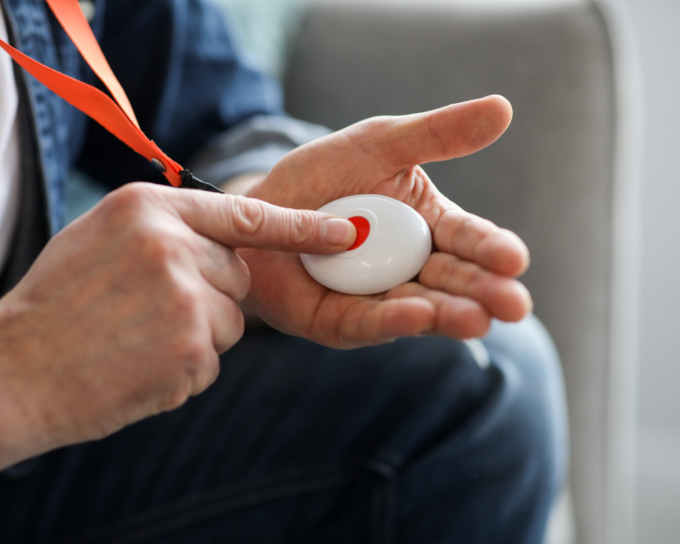
PERS devices can be worn (around one’s neck or wrist) or kept in a pocket. Each device has a button that can be pressed in the event of an emergency. The device is connected to the user’s telephone number, and when the button is pressed or the PERS device detects a fall, a call is placed to one or more programmed emergency telephone numbers. The call is then picked up by staff at an emergency response center who will identify the caller, determine the nature of the emergency, and call the emergency contact and/or emergency personnel.
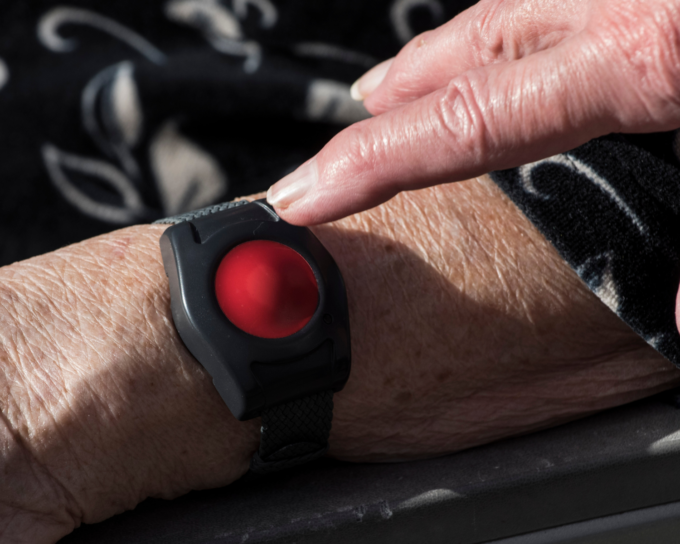
What information will my PERS device provide to the emergency response center?
The PERS device will deliver information to the emergency response team that you provide in a client information form when you set up the device. The company will have you fill out your emergency contacts and information about yourself including:
- Medical conditions
- Allergies
- Prescribed medications
- Doctors’ information
- Any special instructions for medical personnel.
If no one on the emergency contact list can be reached, then emergency services in the area will be dispatched [3]. The following information must be provided for each person on the emergency contact list:
- Name:
- Relationship:
- Has access to your home key: Yes or No
- Phone Numbers:
- Home:
- Work:
- Cell:
Who operates the “Emergency Response Center” and where is it located in proximity to my residence?
There are two types of emergency response centers: provider-based and manufacturer-based.
- Provider-based centers are usually located in the user’s local area and are located inside of hospitals or social service agencies.
- Most modern manufacturer-based PERS devices connect users to a staffed, national, monitoring/response center that operates 24 hours a day, 7 days a week, including holidays [11].
For whatever product is decided on, be sure to find out before buying a PERS device what emergency response center the system uses and what the center’s hours are.
Can I set up the PERS device or does it have to be professionally installed?
Many modern systems are designed to be installed with clear, guided instructions by the user.However, each device is made differently, so it is important to understand what needs to be installed before determining if you can do it yourself or if you need assistance.
What costs are involved?
These devices can be purchased for a one-time upfront fee or in installments. Prices vary depending on the device(s) and plan(s) that you select. For example, some devices have an upfront device fee with a monthly, quarterly, or annual service fee. The service fee covers the 24/7 call center and, depending on your device and plan, cellular and GPS service. Be sure to research all of the major companies and their devices to see which device(s) and plan(s) fit your situation and lifestyle [4].
Are PERS devices covered by Medicare, Medi-Cal, or insurance companies?
Typically, the cost is not covered., However, if you have enrolled in Medicare Part B and have a prescription for a medical alarm, then there is a possibility that this service would be covered. Sometimes a health insurance provider will reimburse you after you initially pay the total cost up-front.
Additional Frequently Asked Questions (FAQ)
Click on the question to view the answer.
How will emergency personnel gain access to my residence?
The emergency response center will try to contact any caregivers, friends, neighbors, or family members who are programmed into the contact list and have a key to your home, and then have them meet the rescue team at the home.
If I am in trouble and am not in the same room as the PERS console, how will I be heard?
Most PERS consoles are quite sensitive, and in an average-sized home, the emergency response center is usually able to communicate with you regardless of the room you are in. If it is not possible to communicate with you, medical emergency professionals will be dispatched immediately to your home.
Can this device be used outside the home?
If you have a device connected to a console, most PERS devices have a range of 200 to 1,000 feet. Since communication will not be possible while you are outside, paramedics will be dispatched immediately to the house. When you first purchase a PERS device, it is a good idea to test the device’s coverage range. If you have a PERS device that is connected to a cellular network, you should have coverage virtually anywhere.
What happens in the event of a power outage?
Many PERS devices have a battery backup that allows the unit to operate for several hours during a power outage. When power is restored, the battery begins to recharge so it will be ready for future power outages.
Take the Next Step
If you or someone you care for could benefit from a PERS device, start the conversation with them today. Talk with your primary care provider (PCP), social worker, or family members about whether a PERS device is right for you. They can help you evaluate your specific needs, review available options, and connect you with trusted providers. Taking a few minutes now to plan can make all the difference in protecting your health, safety, and peace of mind.
Fall Detection and Wearable Technology
Newer wearable technologies such as the Apple Watch, Samsung Galaxy Watch, Google Pixel Watch, and Garmin Venu now offer safety features designed to detect falls and connect users with help. While these devices are not a replacement for medical alert systems, they can provide an added peace of mind for older adults and caregivers.
How It Works:
Apple Watch & Google Pixel Watch
If a hard fall is detected, the device will vibrate, sound an alarm, and display an alert asking if the wearer is okay. The user can cancel the alert if no help is needed. If the user does not respond or remain immobile for about one minute, the device will automatically call local emergency services (9-1-1) and share your location. Both can also notify your emergency contacts [5] [6].
Samsung Galaxy Watch
Like the Apple Watch and Google Pixel Watch, similar fall detection alerts are available for the Samsung Galaxy Watch. You can choose how and when the feature works (always on, during activity, or during workouts). The watch can send a text message to contacts letting them know that a fall has occurred and may also call emergency services, depending on your settings [7].
Garmin Venu
This device utilizes incident detection during outdoor activities such aswalking, running, or biking. If an incident is detected, the watch alerts you and, unless canceled, sends your location to chosen emergency contacts via text/email. Unlike the others, Garmin devices do not directly call 9-1-1 [8].
Some wearable technology have safety features that can act like a PERS device, but it’s important to consider the following:
- Set-up matters.
- Fall detection often needs to be turned on manually in the device settings. To ensure the right parties are notified, the user will need to make sure emergency contacts and health information are updated.
- Who gets called?
- Most smartwatches connect directly to 9-1-1, unlike traditional PERS devices, which connect to a monitoring center that dispatches help [9].
- Limitations.
- No system is perfect. False alarms or missed detections may occur. These devices should be seen as an extra layer of safety rather than a replacement for medical alert systems or emergency planning [10].
Sources
[3] AARP. (2025, September 5). Medical alert systems: Choosing the best option. https://www.aarp.org/caregiving/home-care/medic-alert-systems-options/
[1] Appeadu, M. K., & Bordoni, B. (2025, January). Falls and fall prevention in older adults. StatPearls Publishing. https://www.ncbi.nlm.nih.gov/books/NBK560761/
[5] Apple Inc. (2025, March 17). Use fall detection with Apple Watch. Apple Support. https://support.apple.com/en-us/108896
[10] Bracaglia, D. (2025, June 19). Google exclusive: How the Pixel Watch 3 got a life-saving feature the Apple Watch can’t match. Tom’s Guide. https://www.tomsguide.com/wellness/smartwatches/google-exclusive-how-the-pixel-watch-3-got-a-life-saving-feature-the-apple-watch-cant-match
[11] Broome County Office for Aging. (2022, August). Personal emergency response systems (PERS units). Broome County, NY. https://broomecountyny.gov/sites/default/files/dept/senior/OFA%20Masters/PERSONAL%20EMERGENCY%20RESPONSE%20SYSTEMS%20August%202022.pdf
[6] Cormie, A. (2023, June 13). How Google Pixel Watch knows when you fall. Google Blog. https://blog.google/products/pixel/google-pixel-watch-fall-detection-ai/
[8] Garmin Ltd. (n.d.). Turning incident detection on and off. Garmin Support. https://www8.garmin.com/manuals/webhelp/venu/EN-US/GUID-F5AFA4E1-C3BE-4649-925F-9308B3257C29.html
[2] National Institute on Aging. (n.d.). Falls and fractures in older adults: Causes and prevention. U.S. Department of Health and Human Services. https://www.nia.nih.gov/health/falls-and-falls-prevention/falls-and-fractures-older-adults-causes-and-prevention
[4] National Council on Aging. (2025, August 21). The best medical alert systems of 2025: Tested and reviewed. https://www.ncoa.org/product-resources/medical-alert-systems/best-medical-alert-systems/
[9] National Council on Aging. (2025, June 13). Apple Watch as a medical alert system? What to know. https://www.ncoa.org/article/apple-watch-as-medical-alert-system-what-to-know/
[7] Samsung Electronics. (2024, July 15). Use the Detect fall feature on your Samsung smart watch. Samsung Support. https://www.samsung.com/us/support/answer/ANS10003423/